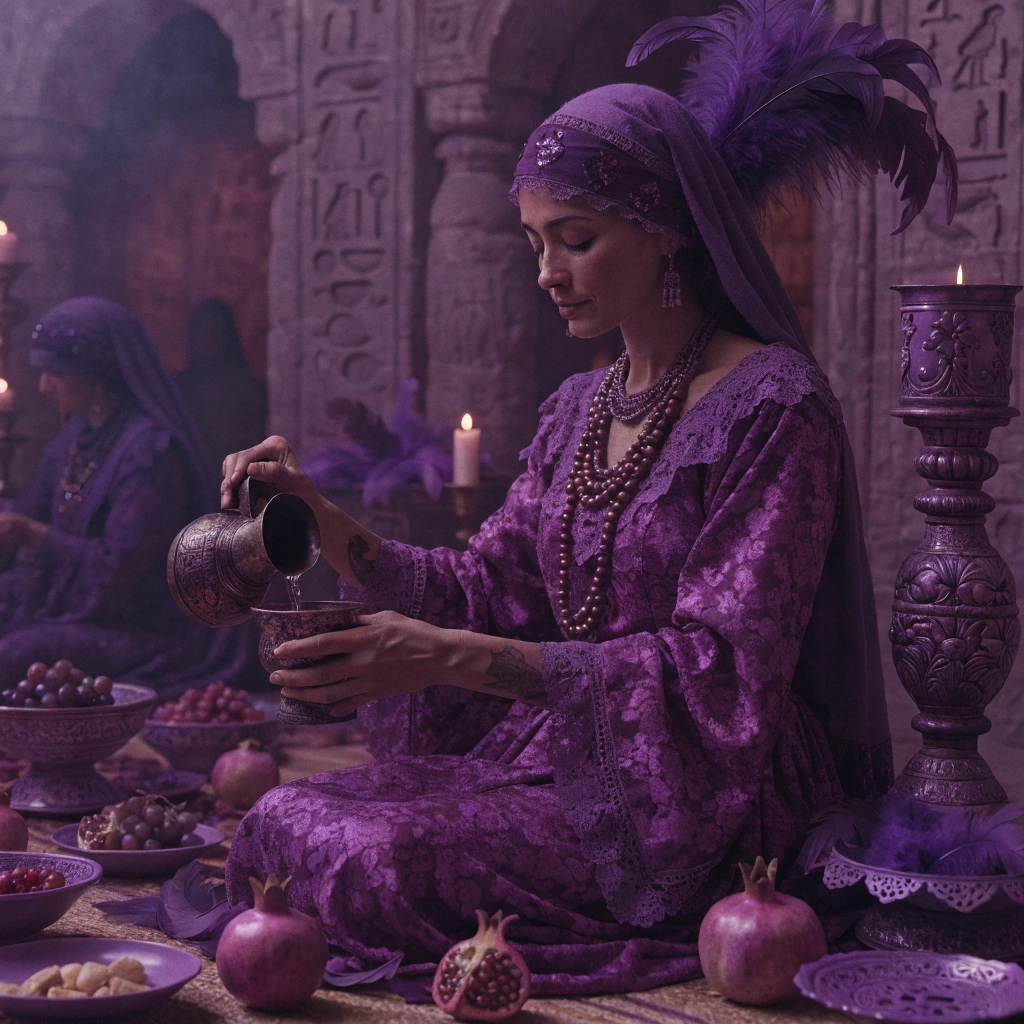
A Special Day for a New Baby
In Egypt, families celebrate a new baby. They call this day El Soboue. It happens seven days after the baby is born. This is a very old tradition. It comes from ancient times.
The family gathers at home. They put the baby in a special basket. They make a lot of noise with metal pots. This noise is for the baby. People sing happy songs. They give nuts and sweets to the children.
The baby wears new clothes. Friends and neighbors visit the family. Everyone is happy. It is a beautiful day for the new baby and the family.
Grammar Spotlight
Pattern: Present Simple (Third Person Plural)
"They put the baby in a special basket."
We use the present simple for habits and facts. With 'they', we use the base form of the verb without an 's'.
Pattern: The Verb 'To Be' (Present Simple)
"It is a beautiful day for the new baby."
We use 'is' with the pronoun 'it' to describe a situation or a thing. It connects the subject to an adjective.
Test Your Understanding
10 questions · A1 Beginner · 1 free preview
Test what you learned from this article. Answer all questions to earn XP!
When does El Soboue happen?
Want to finish the quiz?
9 more questions are waiting for you. Sign up free to unlock the full quiz and earn XP!
Sign Up FreeAlready have an account? Sign In
Question Breakdown
When does El Soboue happen?
Your answer:
Correct answer: Seven days after birth
El Soboue is a new tradition in Egypt.
Your answer:
Correct answer: False
What is a 'basket'?
Your answer:
Correct answer: A container to hold things
The family _____ at home for the celebration.
Your answer:
Correct answer: gathers
Celebrating El Soboue: A Special Seventh Day
In Egypt, the first week of a baby's life is very important. Families celebrate a special party called 'El Soboue'. The name comes from the Arabic word for seven. This tradition started more than 3,000 years ago. You can see similar pictures in ancient Pharaonic tombs.
During the party, the family puts the baby in a special basket called a 'ghirbal'. The mother shakes the basket gently. This makes the baby strong and brave. People also make a lot of noise with metal objects because they believe this keeps the baby safe.
Families invite many friends and neighbors. They eat a lot of food and give sweets to the children. El Soboue is more colorful than a normal birthday party. It is a happy time because the baby is one week old and healthy. Everyone sings traditional songs and the house is full of joy.
Grammar Spotlight
Pattern: Past Simple (Regular)
"This tradition started more than 3,000 years ago."
We use the past simple to talk about finished actions in the past. For regular verbs, we usually add '-ed' to the end of the verb.
Pattern: Comparatives
"El Soboue is more colorful than a normal birthday party."
We use 'more' + adjective + 'than' to compare two things when the adjective is long. It shows that one thing has more of a quality than another.
Test Your Understanding
11 questions · A2 Elementary · 1 free preview
Test what you learned from this article. Answer all questions to earn XP!
When does the 'El Soboue' party happen?
Want to finish the quiz?
10 more questions are waiting for you. Sign up free to unlock the full quiz and earn XP!
Sign Up FreeAlready have an account? Sign In
Question Breakdown
When does the 'El Soboue' party happen?
Your answer:
Correct answer: Seven days after the baby is born
The tradition of El Soboue is a modern invention.
Your answer:
Correct answer: False
What does 'ancient' mean?
Your answer:
Correct answer: From a very long time ago
The mother _____ the basket gently to make the baby strong.
Your answer:
Correct answer: shakes
Why is El Soboue a happy time?
Your answer:
Correct answer: Because the baby is healthy
El Soboue: A 3,000-Year-Old Egyptian Tradition
In Egypt, the arrival of a new baby is celebrated with a beautiful tradition called 'El Soboue.' This special event takes place exactly seven days after the birth. The name comes from the Arabic word 'Saba’a,' which means seven. For many centuries, Egyptian families have celebrated this milestone to welcome the newborn into the community.
Historians believe that El Soboue is a tradition which has roots in Ancient Egypt. In Pharaonic tomb paintings, similar ceremonies are shown, suggesting that this ritual has been performed for over 3,000 years. In the past, the first week of life was a very difficult time for babies. Therefore, reaching the seventh day was a great success that needed a big celebration.
During the ceremony, several traditional rituals are performed. The baby is often placed inside a decorated sieve, which is a large wooden basket with a mesh bottom. The mother gently shakes the sieve while the guests make noise with metal mortars. This is done to prepare the baby for the loud world outside. Incense is also burned to protect the child from bad luck.
Throughout the day, special songs are sung and guests are given small bags of sweets and nuts. These gifts are often shared with the whole neighborhood. Even though modern medicine has made the first week of life much safer, El Soboue remains a vital part of Egyptian culture because it connects the past with the present.
Grammar Spotlight
Pattern: Present Perfect
"For many centuries, Egyptian families have celebrated this milestone to welcome the newborn into the community."
The present perfect is formed with 'have/has' and the past participle. It is used here to describe an action that started in the past and continues to the present day.
Pattern: Passive Voice
"During the ceremony, several traditional rituals are performed."
The passive voice is formed with 'to be' and the past participle. It is used when the action itself is more important than who is doing it.
Test Your Understanding
11 questions · B1 Intermediate · 1 free preview
Test what you learned from this article. Answer all questions to earn XP!
When does the El Soboue ceremony take place?
Want to finish the quiz?
10 more questions are waiting for you. Sign up free to unlock the full quiz and earn XP!
Sign Up FreeAlready have an account? Sign In
Question Breakdown
When does the El Soboue ceremony take place?
Your answer:
Correct answer: Seven days after birth
El Soboue is a modern tradition that started only 50 years ago.
Your answer:
Correct answer: False
What does the word 'milestone' mean in the text?
Your answer:
Correct answer: An important event or stage
The baby is placed inside a decorated _____, which the mother gently shakes.
Your answer:
Correct answer: sieve
Why do guests make noise with metal mortars during the ceremony?
Your answer:
Correct answer: To prepare the baby for the loud world
El Soboue: A Millennial Celebration of New Life
Few cultural practices in Egypt are as vibrant and steeped in history as 'El Soboue.' Derived from the Arabic word for 'seven' (Saba'a), this ceremony takes place exactly one week after a baby is born. This tradition is not merely a family gathering; it is a profound cultural milestone that reflects the endurance of Egyptian identity. Remarkably, historical evidence suggests that these rituals have parallels in Pharaonic tomb paintings, indicating that the seventh day of life has been celebrated for over 3,000 years.
In ancient times, the first week of a child's life was considered a critical period for survival. Passing this threshold was a significant achievement, which explains why the celebration is so elaborate. The ritual involves various symbolic elements designed to protect the newborn. For instance, a clay pot is often used, and candles are lit to represent the child's future path. Furthermore, salt is scattered throughout the home, a practice intended to ward off evil spirits and ensure the infant's safety.
Having observed these practices for millennia, Egyptians continue to honor the seventh day with great enthusiasm. The social aspect of El Soboue is equally significant. It is a communal event where extended family members and neighbors gather to sing traditional songs. During the ceremony, the mother often steps over the baby seven times, a gesture believed to grant the child strength and resilience. Although modern medicine has significantly reduced infant mortality rates, the emotional and cultural weight of the seventh day remains unchanged.
Despite the modernization of Egyptian society, El Soboue persists as a vital manifestation of heritage. Not only does the ceremony serve as a social gathering, but it also acts as a profound link to the Pharaonic past. While some families may adapt the customs to suit contemporary lifestyles, the core elements remain remarkably consistent. This preservation of tradition allows younger generations to connect with their ancestors while celebrating new beginnings. In conclusion, El Soboue is more than just a party; it is a sophisticated blend of ancient belief and modern joy, proving that some traditions are simply too meaningful to be forgotten.
Grammar Spotlight
Pattern: Passive Voice
"Derived from the Arabic word for 'seven' (Saba'a), this ceremony takes place exactly one week after a baby is born."
The passive voice is used here to focus on the baby and the action of birth rather than who performed the delivery. It is formed using the verb 'to be' and the past participle.
Pattern: Perfect Participle Clause
"Having observed these practices for millennia, Egyptians continue to honor the seventh day with great enthusiasm."
This structure is used to indicate that one action happened before another. 'Having observed' shows that the long history of observation precedes the current continued honoring of the tradition.
Pattern: Inversion with Negative Adverbials
"Not only does the ceremony serve as a social gathering, but it also acts as a profound link to the Pharaonic past."
When starting a sentence with 'not only,' the subject and auxiliary verb are inverted (does the ceremony serve). This adds emphasis and is common in formal B2 level writing.
Test Your Understanding
11 questions · B2 Upper Intermediate · 1 free preview
Test what you learned from this article. Answer all questions to earn XP!
What is the historical origin of the El Soboue ritual according to the article?
Want to finish the quiz?
10 more questions are waiting for you. Sign up free to unlock the full quiz and earn XP!
Sign Up FreeAlready have an account? Sign In
Question Breakdown
What is the historical origin of the El Soboue ritual according to the article?
Your answer:
Correct answer: It has parallels in Pharaonic tomb paintings.
The ritual of scattering salt is intended to represent the child's future career path.
Your answer:
Correct answer: False
What does the word 'endurance' mean in the context of the article?
Your answer:
Correct answer: The ability of a culture to survive over a long time.
The seventh day was historically significant because the first week was a _____ period for infant survival.
Your answer:
Correct answer: critical
Why does the mother step over the baby seven times during the ceremony?
Your answer:
Correct answer: To grant the child strength and resilience.
El Soboue: An Ancient Echo in the Modern Egyptian Social Fabric
Seldom has a cultural practice survived the relentless march of time with such unwavering tenacity as the Egyptian 'El Soboue.' Derived from the Arabic numeral for seven, this intricate rite of passage occurs exactly one week following an infant's birth. While contemporary observers might perceive it as a mere festive gathering, a more critical analysis reveals it to be a profound vestige of Pharaonic antiquity. Indeed, the striking parallels between modern Soboue rituals and scenes depicted in ancient Theban tomb paintings suggest a cultural continuity spanning over three millennia. Historically, the first week of an infant's life was fraught with extreme peril. In an era before the advent of modern neonatology, passing the seventh day represented a significant milestone in infant survival. It is this historical precariousness that necessitated the elaborate orchestration of the Soboue, transforming a biological survival mark into a communal celebration of resilience.
The meticulous orchestration of the event underscores its importance. The ceremony serves not only as a joyous welcome but also as a symbolic protective barrier against malevolent forces, particularly the 'evil eye' or Hassad. Central to the ritual is the 'ghorbal,' a large, decorated sieve in which the infant is placed. The rhythmic shaking of the sieve is intended to accustom the child to the inevitable vicissitudes of life, while the piercing clanging of a brass mortar and pestle is believed to sharpen the child’s hearing and ward off spiritual harm. What characterizes the Soboue most distinctly is the convergence of religious and secular symbolism. The use of seven types of grains—the 'seb’eya'—and the lighting of seven candles evoke a sense of abundance and divine providence that transcends sectarian boundaries. Furthermore, the gender-specific clay vessels—the 'gholla' for girls and the 'ebriq' for boys—highlight the traditional societal structures that underpin the event.
However, to view these practices through a purely patriarchal lens would be to overlook the nuanced role of the matriarchs who oversee the proceedings. It is the elder women of the family who ensure the preservation of ancestral wisdom, meticulously guiding the younger generation through each symbolic step. The resilience of El Soboue in the face of rapid urbanization and the encroachment of Western-style baby showers is a testament to the Egyptian people's deep-seated connection to their heritage. Despite the globalization of consumer habits, the Soboue remains an indispensable component of the Egyptian identity. It provides a communal space where the collective memory of the nation is reinforced through shared sensory experiences: the scent of burning incense, the taste of 'moghāt' (a traditional herbal beverage), and the melodic chanting of traditional songs. Ultimately, the preservation of such rites is not merely an act of nostalgia; it is an assertion of cultural sovereignty. Through the Soboue, Egyptians continue to navigate the complexities of the present by anchoring themselves in the enduring echoes of their storied past.
Grammar Spotlight
Pattern: Negative Inversion
"Seldom has a cultural practice survived the relentless march of time with such unwavering tenacity as the Egyptian 'El Soboue.'"
Inversion is used for emphasis by placing a negative or restrictive adverbial (like 'seldom') at the beginning of the sentence, followed by the auxiliary verb and then the subject.
Pattern: Cleft Sentences
"What characterizes the Soboue most distinctly is the convergence of religious and secular symbolism."
A 'What-cleft' sentence focuses on a specific part of the information by starting with a relative clause, allowing the speaker to emphasize the characteristic being discussed.
Pattern: Nominalisation
"The meticulous orchestration of the event underscores its importance."
Nominalisation involves turning verbs (orchestrate) into nouns (orchestration) to create a more formal, academic, and concise tone typical of C1 level writing.
Test Your Understanding
12 questions · C1 Advanced · 1 free preview
Test what you learned from this article. Answer all questions to earn XP!
What is the primary historical reason for celebrating the seventh day of a child's life?
Want to finish the quiz?
11 more questions are waiting for you. Sign up free to unlock the full quiz and earn XP!
Sign Up FreeAlready have an account? Sign In
Question Breakdown
What is the primary historical reason for celebrating the seventh day of a child's life?
Your answer:
Correct answer: It marked a significant milestone in infant survival in ancient times
The article suggests that El Soboue is a relatively modern invention with no links to ancient history.
Your answer:
Correct answer: False
What does 'vestige' mean in the context of the article?
Your answer:
Correct answer: A small remaining part of something ancient
The rhythmic shaking of the sieve is intended to accustom the child to the _____ of life.
Your answer:
Correct answer: vicissitudes
Which item is traditionally used for a baby boy during the ceremony?
Your answer:
Correct answer: An ebriq
The author argues that Western-style baby showers have completely replaced the Soboue in Egypt.
Your answer:
Correct answer: False
The Palimpsest of Progeny: Deciphering the Ontological Significance of Egypt's El Soboue Ritual
In the labyrinthine tapestry of Egyptian cultural heritage, few threads remain as vibrantly resilient as the ceremony of El Soboue. Deriving its nomenclature from the Arabic 'Saba’a', denoting the number seven, this rite occurs precisely one week post-parturition. While a cursory glance might dismiss it as a mere domestic conviviality, a more rigorous scholarly inquiry reveals a profound ontological palimpsest, where modern Islamic and Coptic traditions are superimposed upon atavistic Pharaonic foundations. The historical lineage of El Soboue is nothing short of extraordinary. Iconography discovered within the subterranean chambers of Pharaonic tombs depicts scenes that bear a startling resemblance to contemporary practice. In the harsh demographic reality of ancient Egypt, where infant mortality rates were staggeringly high, the first seven days of life represented a critical threshold. Only after navigating this precarious temporal space was a child deemed sufficiently robust to be formally integrated into the community. Thus, El Soboue serves as a definitive marker of liminality, facilitating the transition from biological existence to social personhood.
Central to the ritual’s symbolic architecture is the 'ghirbal'—a large sieve into which the infant is placed. This vessel is not merely utilitarian; it is a locus of apotropaic power. As the mother gently shakes the sieve, the rhythmic motion is intended to accustom the child to the vicissitudes of life. Simultaneously, the scattering of salt and the lighting of seven candles—elements that find their vestiges in the elemental rites of the Nile valley—are performed to ward off malevolent spirits. Scarcely had the infant survived the precarious first week in antiquity than the community would coalesce to ensure its spiritual protection through these specific actions. It is imperative that the child be initiated into the social fabric through these vocalizations, which act as a linguistic baptism. This syncretism of sound, movement, and material culture underscores the ritual’s role in reinforcing communal identity and familial cohesion.
The auditory dimension of the ceremony is equally significant. Female relatives and children engage in a rhythmic circumambulation of the infant, chanting traditional incantations that emphasize obedience to parents and devotion to the divine. Furthermore, the gendered nuances of El Soboue merit analytical attention. The distribution of 'moghāt'—a traditional beverage made from Fenugreek—and sweets to guests reflect the socio-economic underpinnings of the event. One might posit that the ritual serves as a psychological anchor for the parents, transforming the anxiety of early parenthood into a structured celebration of continuity. Were one to examine the socio-political shifts in modern Egypt, one would find that despite the encroachment of Western-style baby showers, El Soboue remains an indomitable bastion of local identity.
Lest the malevolent forces of the 'evil eye' disrupt the child's future, the ritual incorporates the symbolic 'seven grains,' representing fertility and abundance. This agrarian symbolism further anchors the ceremony in Egypt’s millenary history as a riverine civilization. The seven candles, often placed in a clay pot, are thought to represent the seven days of the week, or perhaps more anciently, the seven planetary deities that oversaw human destiny. The persistence of these elements suggests that the collective consciousness of the Egyptian people remains deeply tethered to its ancestral roots, even as the external trappings of society modernize. Ultimately, El Soboue is more than a mere vestige of a bygone era; it is a living testament to the enduring nature of Egyptian cultural memory. By bridging the chasm between the Pharaonic past and the globalized present, it provides a sense of ontological security in an ever-changing world. Whether viewed through the lens of anthropology, history, or sociology, the seventh day remains a sanctified milestone, celebrating the triumph of life over the fragility of the human condition.
Grammar Spotlight
Pattern: Negative Inversion
"Scarcely had the infant survived the precarious first week in antiquity than the community would coalesce to ensure its spiritual protection..."
This structure is used for emphasis and to indicate that one event happens immediately after another. When 'Scarcely' begins a sentence, the auxiliary verb 'had' precedes the subject 'infant'.
Pattern: Mandative Subjunctive
"It is imperative that the child be initiated into the social fabric through these vocalizations..."
The subjunctive mood is used here after the adjective 'imperative'. The base form of the verb 'be' is used regardless of the subject's person or number.
Pattern: Second Conditional with Inversion
"Were one to examine the socio-political shifts in modern Egypt, one would find..."
This is a formal alternative to 'If one were to examine'. It is used in academic writing to present a hypothetical situation or a theoretical analysis.
Test Your Understanding
12 questions · C2 Mastery · 1 free preview
Test what you learned from this article. Answer all questions to earn XP!
What does the author suggest by calling El Soboue an 'ontological palimpsest'?
Want to finish the quiz?
11 more questions are waiting for you. Sign up free to unlock the full quiz and earn XP!
Sign Up FreeAlready have an account? Sign In
Question Breakdown
What does the author suggest by calling El Soboue an 'ontological palimpsest'?
Your answer:
Correct answer: It is a layered practice where ancient roots are still visible beneath modern traditions.
The 'ghirbal' is primarily used for its practical utility in cleaning grains during the ceremony.
Your answer:
Correct answer: False
What does 'apotropaic' mean in the context of the article?
Your answer:
Correct answer: Designed to ward off evil or bad luck.
The ritual serves as a definitive marker of _____, facilitating the transition from biological existence to social personhood.
Your answer:
Correct answer: liminality
According to the text, why was the seventh day historically significant in ancient Egypt?
Your answer:
Correct answer: It was a critical survival milestone due to high infant mortality.
The author argues that Western-style baby showers have completely replaced El Soboue in modern Egypt.
Your answer:
Correct answer: False
