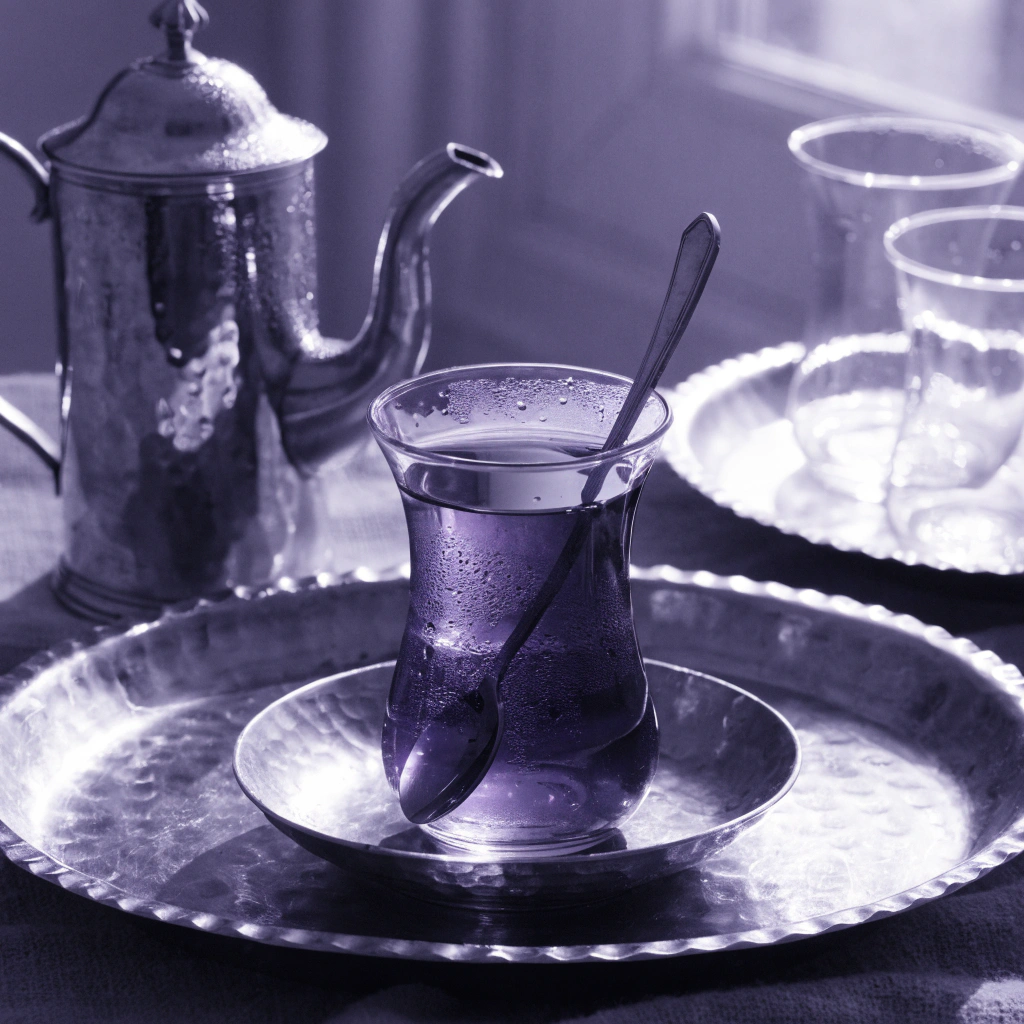
Tea in Turkey
Turkish tea is very popular. People call it 'çay'. It is a hot drink. People drink tea every day. They drink it in the morning and in the evening.
In Turkey, tea is a symbol of friendship. When you visit a friend, they give you tea. The glass is small and beautiful. It looks like a flower.
People put sugar in the tea. They do not use milk. Turkish tea is dark and strong. It is delicious!
Grammar Spotlight
Pattern: Present Simple for Habits
"People drink tea every day."
We use the present simple to talk about things we do regularly. For 'I', 'you', 'we', and 'they', we use the base verb without adding 's'.
Pattern: Adjectives
"It is a hot drink."
Adjectives describe nouns. In English, we usually put the adjective before the noun, like 'hot drink' or 'small glass'.
Test Your Understanding
10 questions · A1 Beginner · 1 free preview
Test what you learned from this article. Answer all questions to earn XP!
What is the Turkish word for tea?
Want to finish the quiz?
9 more questions are waiting for you. Sign up free to unlock the full quiz and earn XP!
Sign Up FreeAlready have an account? Sign In
Question Breakdown
What is the Turkish word for tea?
Your answer:
Correct answer: Çay
People in Turkey use milk in their tea.
Your answer:
Correct answer: False
What does 'delicious' mean?
Your answer:
Correct answer: Very good taste
Turkish tea is dark and _____.
Your answer:
Correct answer: strong
Turkish Tea: A Drink for Friends
Turkish tea, or çay, is very important in Turkey. People drink it every day from morning until night. It is more popular than coffee because it is a symbol of friendship and hospitality. When you visit a shop or a friend’s house, the host always gives you a small glass of hot tea. They use special tulip-shaped glasses called 'ince belli.'
In the past, people in Turkey drank more coffee. However, tea became cheaper and easier to grow in the Black Sea region after the 1920s. Now, Turkey has one of the highest tea consumption rates in the world. People usually add sugar to their tea, but they almost never use milk.
Tea brings people together in every city. You can see groups of friends talking and drinking tea in the streets, at parks, or at work. It is not just a drink; it is a way to say 'welcome.' If you go to Turkey, you must try this delicious tea. It is better than any other drink for relaxing with friends.
Grammar Spotlight
Pattern: Comparatives
"It is more popular than coffee because it is a symbol of friendship."
We use comparatives to look at the differences between two things. For long adjectives like 'popular', we use 'more' + adjective + 'than'.
Pattern: Past Simple
"In the past, people in Turkey drank more coffee."
We use the past simple to talk about finished actions in the past. 'Drank' is the irregular past form of the verb 'drink'.
Test Your Understanding
11 questions · A2 Elementary · 1 free preview
Test what you learned from this article. Answer all questions to earn XP!
Where is tea grown in Turkey?
Want to finish the quiz?
10 more questions are waiting for you. Sign up free to unlock the full quiz and earn XP!
Sign Up FreeAlready have an account? Sign In
Question Breakdown
Where is tea grown in Turkey?
Your answer:
Correct answer: In the Black Sea region
Turkish people usually put milk in their tea.
Your answer:
Correct answer: False
What does 'delicious' mean?
Your answer:
Correct answer: Tasting very good
The tea glasses have a _____ shape.
Your answer:
Correct answer: tulip
Why is tea important in Turkey?
Your answer:
Correct answer: Because it is a symbol of friendship
More Than a Drink: The Heart of Turkish Tea Culture
In Turkey, tea is much more than just a hot drink. It is a symbol of hospitality which brings people together in every city and village. If you have ever visited Turkey, you have probably noticed that a small, tulip-shaped glass of tea is offered almost everywhere. This glass is known as 'ince belli', which means 'thin-waisted' in Turkish.
Turkish tea, called çay, is grown in the Black Sea region, particularly in the city of Rize. The tea leaves are harvested throughout the summer and then processed to create a strong, dark liquid. To prepare the perfect cup, a double teapot called a 'çaydanlık' is used. The water is boiled in the bottom pot, while the tea leaves are brewed in the smaller top pot. When it is ready, the tea is poured into the glass and then diluted with boiling water according to how strong you like it.
Tea has been consumed in Turkey for many years, and the country now has one of the highest consumption rates in the world. It is served at breakfast, during work breaks, and late into the evening. In the Grand Bazaar, shopkeepers often offer tea to customers while they are bargaining for carpets or spices. It is considered rude to refuse a cup of tea because it is a sign of friendship.
Whether you are waiting for a meeting to begin or visiting a friend's home, tea is always present. It is a social lubricant that helps people talk and relax. Even though coffee is also famous, tea has become the true heart of Turkish culture.
Grammar Spotlight
Pattern: Present Perfect
"If you have ever visited Turkey, you have probably noticed that a small, tulip-shaped glass of tea is offered almost everywhere."
The present perfect (have/has + past participle) is used here to talk about life experiences at an unspecified time in the past.
Pattern: Passive Voice
"Turkish tea, called çay, is grown in the Black Sea region, particularly in the city of Rize."
The passive voice (is/are + past participle) is used when the action or the object being acted upon is more important than who is performing the action.
Test Your Understanding
11 questions · B1 Intermediate · 1 free preview
Test what you learned from this article. Answer all questions to earn XP!
What is the traditional shape of a Turkish tea glass?
Want to finish the quiz?
10 more questions are waiting for you. Sign up free to unlock the full quiz and earn XP!
Sign Up FreeAlready have an account? Sign In
Question Breakdown
What is the traditional shape of a Turkish tea glass?
Your answer:
Correct answer: Tulip-shaped
Turkish tea is primarily grown in the Mediterranean region of Turkey.
Your answer:
Correct answer: False
What does the word 'refuse' mean in the context of the article?
Your answer:
Correct answer: To say no to an offer
In Turkey, tea is often offered as a sign of _____.
Your answer:
Correct answer: friendship
Why is a double teapot (çaydanlık) used?
Your answer:
Correct answer: To boil water and brew tea separately before mixing
The Mahogany Ritual: Understanding Turkish Tea Culture
In the heart of Turkey, tea, or 'çay', is significantly more than just a hot beverage; it represents a fundamental social lubricant that facilitates interaction across all levels of society. Whether you are wandering through the bustling corridors of the Grand Bazaar or visiting a local household, the offer of a glass of tea is an inevitable gesture of hospitality. This practice has become so deeply ingrained in the national identity that Turkey consistently records one of the highest per-capita tea consumption rates globally. For many citizens, the day does not truly begin until the first pot has been brewed.
The preparation of Turkish tea is a meticulous ritual that requires a specific tool known as a 'çaydanlık'. This double-stacked teapot allows the tea to be brewed to a concentrated strength in the top pot while boiling water remains in the bottom. Consequently, the host can customize each glass to the guest's preference, ranging from 'koyu' (dark and strong) to 'açık' (light). The tea is traditionally served in small, tulip-shaped glasses, which are distinctive for their 'ince belli' or thin-waist design. These glasses are not merely aesthetic; they are designed to keep the tea hot while allowing the drinker to admire the mahogany color of the liquid. Holding the glass by the rim prevents the fingers from being burned, a technique every local masters early in life.
Furthermore, tea plays a pivotal role in professional environments and public spaces. It is almost impossible to conclude business negotiations without several rounds of çay. It serves to break the ice and establish a sense of mutual trust between parties. In every town, 'çay bahçesi' (tea gardens) act as vibrant communal hubs where people from all walks of life gather to discuss politics, sports, or daily gossip. Despite its ubiquitous presence today, tea production in Turkey is a relatively modern phenomenon. It was only in the mid-20th century that the government began to encourage farmers to cultivate tea in the Rize province, located in the eastern Black Sea region. The humid climate and fertile soil of this area proved to be ideal for the tea plants.
In conclusion, Turkish tea culture is a testament to the importance of community and shared moments. While coffee may have a longer historical association with the Ottoman Empire, it is tea that has captured the daily rhythm of modern Turkish life. To refuse a cup might even be perceived as a slight, as the act of drinking tea together symbolizes a commitment to friendship and social cohesion. It remains an enduring symbol of Turkish warmth and a bridge between tradition and modernity.
Grammar Spotlight
Pattern: Present Perfect Passive
"This practice has become so deeply ingrained in the national identity..."
The present perfect passive (has/have been + past participle) is used here to describe a state that started in the past and continues to be relevant now, focusing on the result of the action.
Pattern: Non-defining Relative Clauses
"The tea is traditionally served in small, tulip-shaped glasses, which are distinctive for their 'ince belli' design."
This clause adds extra information about the glasses. It is separated by a comma because the sentence would still be grammatically complete without it.
Pattern: Passive Voice with Infinitives
"To refuse a cup might even be perceived as a slight."
The passive voice 'be perceived' is used to show how an action is viewed by people in general, rather than focusing on a specific person doing the perceiving.
Test Your Understanding
11 questions · B2 Upper Intermediate · 1 free preview
Test what you learned from this article. Answer all questions to earn XP!
What is the primary function of the 'ince belli' glass design?
Want to finish the quiz?
10 more questions are waiting for you. Sign up free to unlock the full quiz and earn XP!
Sign Up FreeAlready have an account? Sign In
Question Breakdown
What is the primary function of the 'ince belli' glass design?
Your answer:
Correct answer: To keep the tea hot while showing its color
Tea production has been a major part of Turkish history for over 500 years.
Your answer:
Correct answer: False
What does 'ubiquitous' mean in the context of the article?
Your answer:
Correct answer: Found everywhere
It is almost impossible to conclude business _____ without several rounds of çay.
Your answer:
Correct answer: negotiations
Where is the majority of Turkish tea cultivated?
Your answer:
Correct answer: Rize province
The Mahogany Lifeline: Deconstructing the Socio-Cultural Fabric of Turkish Tea
Rarely does one encounter a social interaction in Turkey that is not punctuated by the rhythmic clinking of a teaspoon against a tulip-shaped glass. While coffee historically dominated the Ottoman palate, the contemporary ubiquity of tea (çay) represents a strategic socio-economic pivot that occurred during the early years of the Turkish Republic. Following the collapse of the Ottoman Empire, coffee became an expensive luxury due to its reliance on imports. In response, the state encouraged tea cultivation in the Black Sea region, transforming a foreign beverage into a quintessential symbol of national identity. Today, Turkey boasts one of the highest per-capita tea consumption rates globally, a testament to the drink's inherent role as a social lubricant.
The preparation of Turkish tea is a meticulous process, far removed from the hasty immersion of a tea bag. It requires a çaydanlık, a dual-chambered teapot where the bottom vessel boils water while the top chamber houses the dry leaves. The resulting infusion is a concentrated ‘dem,’ which is then diluted to the drinker’s preference. This method ensures a deep mahogany hue and a specific astringency that is highly prized. It is within the steam rising from the çaydanlık that the essence of Turkish hospitality is distilled; whether in the bustling corridors of the Grand Bazaar or a quiet Anatolian village, the offering of tea is an invitation to pause and engage in communal discourse.
From a sociological perspective, the tulip-shaped glass, known as ‘ince belli,’ is more than an aesthetic choice. It is through the transparency of this vessel that the clarity and color of the tea are meticulously evaluated. Furthermore, the glass is designed to fit snugly in the palm, providing warmth during colder months. The refusal of a glass of tea is often perceived as a minor social transgression, an inadvertent dismissal of the host’s generosity. This proclivity for constant consumption permeates every layer of society, bridging the gap between diverse socio-economic backgrounds. Ultimately, the institutionalization of tea culture in Turkey serves as a precursor to modern social cohesion, reinforcing a shared heritage that remains resilient in the face of rapid globalization.
Grammar Spotlight
Pattern: Negative Inversion
"Rarely does one encounter a social interaction in Turkey that is not punctuated by the rhythmic clinking of a teaspoon."
When using negative adverbs like 'rarely' or 'seldom' at the beginning of a sentence for emphasis, the auxiliary verb comes before the subject.
Pattern: Cleft Sentences
"It is through the transparency of this vessel that the clarity and color of the tea are meticulously evaluated."
Cleft sentences use 'It is... that...' to focus on a specific piece of information, in this case, the method of evaluation.
Pattern: Nominalisation
"The institutionalization of tea culture in Turkey serves as a precursor to modern social cohesion."
Nominalisation involves turning verbs (institutionalize) or adjectives into nouns to create a more formal, academic tone typical of C1 writing.
Test Your Understanding
12 questions · C1 Advanced · 1 free preview
Test what you learned from this article. Answer all questions to earn XP!
What was the primary driver for the shift from coffee to tea in Turkey?
Want to finish the quiz?
11 more questions are waiting for you. Sign up free to unlock the full quiz and earn XP!
Sign Up FreeAlready have an account? Sign In
Question Breakdown
What was the primary driver for the shift from coffee to tea in Turkey?
Your answer:
Correct answer: Economic necessity following the collapse of the Ottoman Empire.
The 'caydanlik' is a single-vessel teapot used for quick brewing.
Your answer:
Correct answer: False
What does 'proclivity' mean in the context of the article?
Your answer:
Correct answer: A natural tendency or inclination toward something.
The refusal of a glass of tea is often perceived as a minor social _____.
Your answer:
Correct answer: transgression
According to the text, what does the tulip-shaped glass allow the drinker to do?
Your answer:
Correct answer: Evaluate the clarity and color of the liquid.
Turkey has one of the highest tea consumption rates per person in the world.
Your answer:
Correct answer: True
The Amber Conduit: Sociological and Aesthetic Dimensions of Turkish Tea Culture
Rarely does a beverage so thoroughly encapsulate the ethos of a nation as çay does in the Republic of Turkey. Were one to traverse the Anatolian plateau or navigate the bustling thoroughfares of Istanbul, the ubiquity of this amber infusion would be immediately manifest. To the uninitiated, it might appear a mere beverage; however, to the Turkish populace, it serves as a vital conduit for social cohesion and an enduring symbol of hospitality. This practice is so deeply ingrained that Turkey maintains one of the highest per-capita tea consumption rates globally, a testament to its central role in the national fabric.
The historical trajectory of tea in Turkey is a fascinating study in cultural adaptation. While the Ottoman Empire was historically synonymous with coffee, the geopolitical shifts following the First World War necessitated a pivot. Coffee, being an imported luxury, became prohibitively expensive, prompting the young Republic to look inward. It was suggested that the Black Sea region, with its mild climate and abundant rainfall, might serve as a fertile ground for tea cultivation. Thus, a state-mandated shift transformed a foreign leaf into a national staple, a vestige of economic pragmatism that has since blossomed into a profound cultural identity.
The aesthetic of the Turkish tea experience is defined by the 'ince belli' glass. This tulip-shaped vessel is not a product of mere whimsy; it is a masterclass in functional design. The narrow waist allows the drinker to hold the glass by the rim, preventing burned fingers, while the flared top facilitates the cooling of the mahogany-colored liquid. The transparency of the glass is equally essential, as it allows the connoisseur to inspect the 'tavşan kanı' (rabbit’s blood) hue—a deep, clear red that signifies a perfect brew. It is imperative that the visitor recognize tea not merely as a refreshment but as a visual and tactile liturgy.
Furthermore, the social dimension of çay is inherently egalitarian. From the 'esnaf' (tradesmen) in the Grand Bazaar to the high-ranking bureaucrats in Ankara, the ritual remains unchanged. The clinking of the small beet-sugar cubes against the glass creates a rhythmic backdrop to Turkish life. This sound is the heartbeat of the 'kıraathane' (reading houses) and the 'çay bahçesi' (tea gardens). In these spaces, tea acts as a social leveler; whether one is a billionaire or a laborer, the tea served is identical, fostering an environment where discourse can flourish.
The sensory experience is further heightened by the method of preparation. The 'çaydanlık,' a dual-chambered teapot, allows for a bespoke strength of tea. The upper pot contains the concentrated brew, while the lower pot holds boiling water, enabling the host to tailor each glass to the guest's preference. This meticulous attention to detail underscores the Turkish philosophy of 'misafirperverlik' (hospitality). To refuse a glass of tea is often perceived as a minor social transgression, an ephemeral slight against the host's goodwill.
In conclusion, Turkish tea culture is a multifaceted phenomenon that permeates every stratum of society. It is a sensory bridge between the past and the present, a vestige of historical necessity that has evolved into a cornerstone of modern identity. As the mahogany liquid flows, so too does the conversation, weaving a tapestry of communal belonging that remains as robust as the brew itself. Should the world continue its frantic pace, the ritual of çay stands as a steadfast reminder of the importance of pause, presence, and the simple act of sharing a glass.
Grammar Spotlight
Pattern: Negative Inversion for Emphasis
"Rarely does a beverage so thoroughly encapsulate the ethos of a nation as çay does in the Republic of Turkey."
When a sentence starts with a negative or restrictive adverb like 'rarely', the subject and auxiliary verb are inverted to create a more formal, emphatic tone common in C2 academic writing.
Pattern: Inverted Conditional (Should/Were)
"Were one to traverse the Anatolian plateau or navigate the bustling thoroughfares of Istanbul, the ubiquity of this amber infusion would be immediately manifest."
The use of 'Were one to' replaces 'If one were to' in formal English. This hypothetical structure adds a scholarly layer to the prose, focusing on the result of a potential action.
Pattern: Subjunctive Mood following 'Imperative'
"It is imperative that the visitor recognize tea not merely as a refreshment but as a visual and tactile liturgy."
The word 'recognize' is in the base form (subjunctive) because it follows an adjective of necessity ('imperative'). This is used to express urgency or importance in formal contexts.
Test Your Understanding
12 questions · C2 Mastery · 1 free preview
Test what you learned from this article. Answer all questions to earn XP!
What primary reason is given for the historical shift from coffee to tea in Turkey?
Want to finish the quiz?
11 more questions are waiting for you. Sign up free to unlock the full quiz and earn XP!
Sign Up FreeAlready have an account? Sign In
Question Breakdown
What primary reason is given for the historical shift from coffee to tea in Turkey?
Your answer:
Correct answer: Economic necessity following geopolitical changes
The 'ince belli' glass was designed primarily for its whimsical and decorative appearance.
Your answer:
Correct answer: False
Which word best describes the quality of being found everywhere in Turkish life?
Your answer:
Correct answer: Ubiquity
The deep red color of the tea is often compared to a _____ hue.
Your answer:
Correct answer: mahogany
What does the author suggest about the social role of tea in Turkey?
Your answer:
Correct answer: It serves as a social leveler across different classes
Refusing a glass of tea in Turkey is generally seen as a significant social honor.
Your answer:
Correct answer: False
