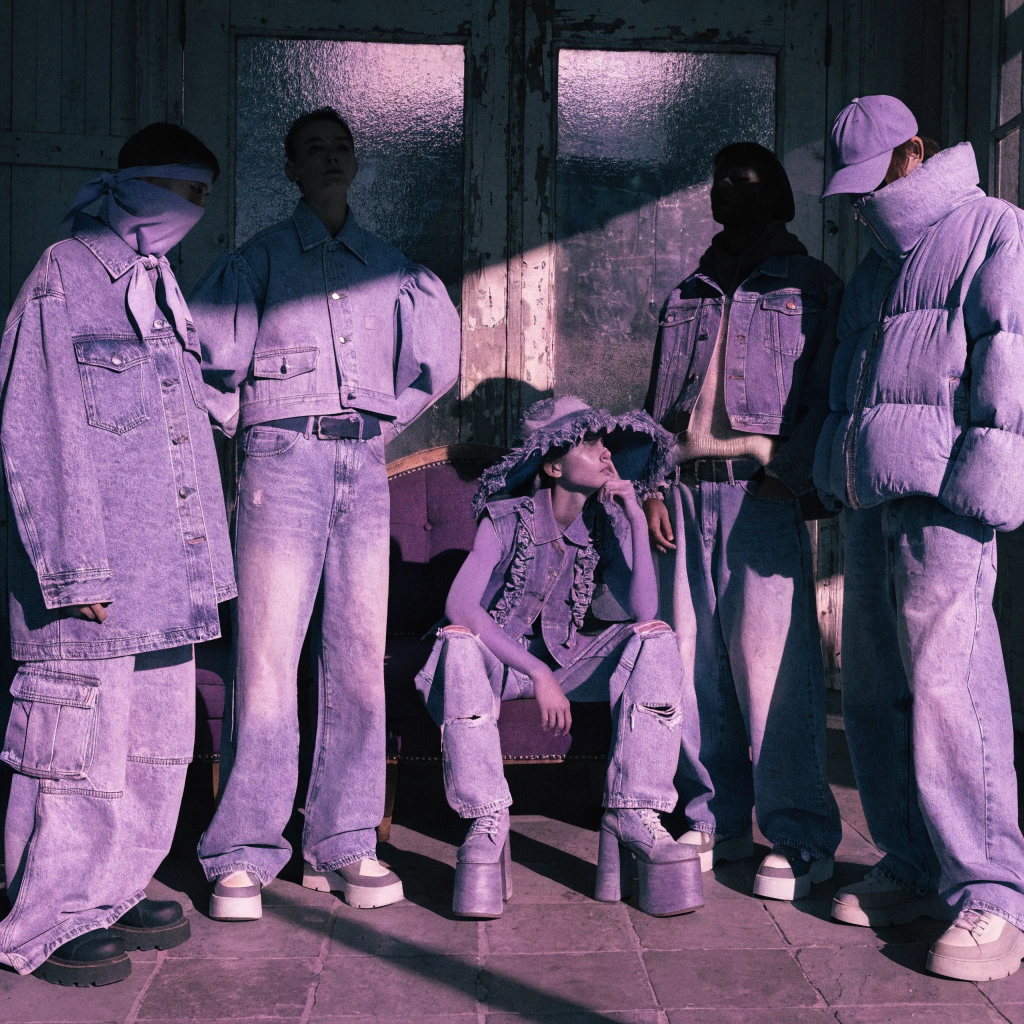
The Story of Blue Jeans
Denim is a very famous fabric from the USA. Many people wear blue jeans every day. In the year 1870, workers in California need very strong pants. Jacob Davis and Levi Strauss make the first blue jeans. They use denim and small metal parts to make the pants strong.
Miners like these pants because they do not break easily. Today, people all over the world love jeans. They are comfortable and simple. You can wear them to work, to school, or at home. Jeans are a symbol of American history and fashion.
Grammar Spotlight
Pattern: Present Simple for Facts
"Many people wear blue jeans every day."
We use the present simple to talk about things that are generally true or happen regularly. For 'many people' (plural), we use the base verb 'wear'.
Pattern: Can for Possibility
"You can wear them to work."
We use 'can' followed by a base verb to show that something is possible. It does not change based on the subject.
Test Your Understanding
10 questions · A1 Beginner · 1 free preview
Test what you learned from this article. Answer all questions to earn XP!
Where is denim originally from in this story?
Want to finish the quiz?
9 more questions are waiting for you. Sign up free to unlock the full quiz and earn XP!
Sign Up FreeAlready have an account? Sign In
Question Breakdown
Where is denim originally from in this story?
Your answer:
Correct answer: The USA
Jacob Davis and Levi Strauss made the first jeans.
Your answer:
Correct answer: True
What is 'fabric'?
Your answer:
Correct answer: Material for clothes
Miners like these _____ because they are strong.
Your answer:
Correct answer: pants
The History of Blue Jeans
Denim is the most famous fabric from the United States. Today, people all over the world wear blue jeans, but the story started a long time ago.
In the 1870s, many workers went to California to find gold. These miners needed very strong trousers because their work was difficult. A tailor named Jacob Davis and a merchant named Levi Strauss worked together. They created special trousers with copper rivets. The rivets made the pockets stronger so they did not break.
At first, only miners and farmers wore denim. However, in the 1950s, movie stars and young people started to wear jeans. Suddenly, jeans became more popular than other clothes. They were comfortable and looked cool.
Now, denim is a symbol of American identity. It is more common than suits in many offices and schools. Almost every person has a pair of jeans in their closet. Denim changed from simple work clothes to a global fashion favorite.
Grammar Spotlight
Pattern: Past Simple
"Jacob Davis and Levi Strauss worked together."
We use the Past Simple to talk about finished actions in the past. To form it for regular verbs, we usually add '-ed' to the base verb.
Pattern: Comparatives
"Jeans became more popular than other clothes."
We use comparatives to compare two things. For long adjectives like 'popular', we use 'more' before the adjective and 'than' after it.
Test Your Understanding
11 questions · A2 Elementary · 1 free preview
Test what you learned from this article. Answer all questions to earn XP!
Where did the story of denim begin?
Want to finish the quiz?
10 more questions are waiting for you. Sign up free to unlock the full quiz and earn XP!
Sign Up FreeAlready have an account? Sign In
Question Breakdown
Where did the story of denim begin?
Your answer:
Correct answer: California
Jeans were first made for office workers.
Your answer:
Correct answer: False
What does 'fabric' mean?
Your answer:
Correct answer: Material used to make clothes
Miners needed very _____ trousers because their work was difficult.
Your answer:
Correct answer: strong
When did jeans become popular with young people?
Your answer:
Correct answer: 1950s
Denim: From Gold Mines to Global Fashion
Denim jeans are probably the most famous piece of clothing that the United States has given to the world. Today, people of all ages and backgrounds wear them, but their fascinating history began in a very different way. In the 1870s, during the peak of the California Gold Rush, miners needed clothes that were strong enough for hard work in the mines.
A tailor named Jacob Davis had a clever idea to make trousers stronger for these workers. He decided to use copper rivets at the corners of the pockets because these specific areas broke easily during physical labor. He eventually partnered with Levi Strauss, who was a successful dry goods merchant in San Francisco. Together, they created what they called 'waist overalls,' which were reinforced for laborers. These early jeans were designed to last a long time in difficult conditions.
For many years, denim was only worn by workers like farmers, miners, and cowboys. However, in the 1950s, jeans started to become popular with teenagers who wanted to look different from their parents. Since then, denim has changed from simple work clothes into a global fashion statement. It has been used by famous designers and is now seen on almost every street in the world.
Denim is more than just a simple fabric; it represents the American spirit of hard work and individual freedom. Even though styles have changed over the decades, the classic blue jean remains a favorite for millions of people. It is a symbol that has successfully traveled from the dusty mines of California to the high-fashion runways of Paris and Milan.
Grammar Spotlight
Pattern: Passive Voice
"These early jeans were designed to last a long time in difficult conditions."
The passive voice is formed with 'to be' + past participle. It is used here because the action (designing) is more important than the person who did it.
Pattern: Present Perfect
"Since then, denim has changed from simple work clothes into a global fashion statement."
The present perfect (has/have + past participle) connects the past to the present. It shows that the change started in the past and is still relevant today.
Test Your Understanding
11 questions · B1 Intermediate · 1 free preview
Test what you learned from this article. Answer all questions to earn XP!
Who did the tailor Jacob Davis partner with to create the first jeans?
Want to finish the quiz?
10 more questions are waiting for you. Sign up free to unlock the full quiz and earn XP!
Sign Up FreeAlready have an account? Sign In
Question Breakdown
Who did the tailor Jacob Davis partner with to create the first jeans?
Your answer:
Correct answer: Levi Strauss
Jeans were originally created for office workers in big cities.
Your answer:
Correct answer: False
What does the word 'laborers' mean in the text?
Your answer:
Correct answer: People who do hard physical work
Denim represents the American _____ of hard work and individual freedom.
Your answer:
Correct answer: spirit
When did jeans become popular with young people as a fashion choice?
Your answer:
Correct answer: In the 1950s
Denim: The Fabric of American Identity
Denim is more than just a fabric; it represents a profound shift in American cultural history. Originally conceived as durable workwear for miners during the 1870s California Gold Rush, denim trousers—then known as 'waist overalls'—were revolutionary. Jacob Davis, a tailor, and Levi Strauss, a dry goods merchant, decided to collaborate to solve a specific problem. They chose to reinforce these garments with copper rivets at stress points, thereby addressing the critical issue of durability for laborers working in harsh conditions. This innovation laid the foundation for what would become an international phenomenon.
As the decades progressed, the perception of denim underwent a significant transformation. During the mid-20th century, what had once been associated exclusively with physical labor became a symbol of youthful defiance and rebellion. Icons such as James Dean and Marlon Brando popularized the 'rebel' look on the silver screen, leading to denim being banned in several American schools for its anti-establishment connotation. Consequently, the fabric evolved from a utilitarian necessity into a powerful statement of individuality and social change. It was no longer just about survival in the mines; it was about expressing a new American spirit.
In the contemporary era, denim has transcended social boundaries, appearing on both high-fashion runways and in everyday wardrobes across the globe. Its ubiquity is a testament to its versatility and timeless appeal. Furthermore, the industry is currently grappling with environmental concerns related to its production. Sustainable manufacturing processes are being implemented to reduce water consumption and chemical waste, ensuring that the legacy of denim continues without compromising the planet's future. This focus on eco-friendly practices reflects a broader societal shift toward responsibility.
Ultimately, denim remains an enduring emblem of American identity, reflecting a journey from the rugged frontier to global ubiquity. It captures the essence of the American Dream—the idea that something humble and practical can evolve into something universally celebrated. Whether worn by a manual laborer or a fashion model, denim continues to tell a story of resilience and adaptation. As we look to the future, the fabric will likely continue to adapt, proving that its place in history is as firm as the rivets that first held it together.
Grammar Spotlight
Pattern: Passive Voice (Present Continuous)
"Sustainable manufacturing processes are being implemented to reduce water consumption and chemical waste."
This pattern is formed using 'am/is/are + being + past participle'. It is used to focus on an action that is currently in progress when the person performing the action is less important than the action itself.
Pattern: Past Participle Phrase
"Originally conceived as durable workwear for miners during the 1870s California Gold Rush, denim trousers were revolutionary."
This structure acts as an adjective to provide background information about the subject. It allows for more complex sentence structures by condensing a relative clause (e.g., 'Which were originally conceived...').
Pattern: Present Perfect
"In the contemporary era, denim has transcended social boundaries, appearing on both high-fashion runways and in everyday wardrobes."
The present perfect (has/have + past participle) connects the past to the present. Here, it indicates an action that started in the past and has a result or relevance in the current time.
Test Your Understanding
11 questions · B2 Upper Intermediate · 1 free preview
Test what you learned from this article. Answer all questions to earn XP!
Why did Jacob Davis and Levi Strauss use copper rivets?
Want to finish the quiz?
10 more questions are waiting for you. Sign up free to unlock the full quiz and earn XP!
Sign Up FreeAlready have an account? Sign In
Question Breakdown
Why did Jacob Davis and Levi Strauss use copper rivets?
Your answer:
Correct answer: To reinforce stress points for better durability
Denim was banned in some schools during the mid-20th century because it was seen as anti-establishment.
Your answer:
Correct answer: True
What does the word 'ubiquity' refer to in the text?
Your answer:
Correct answer: The fact that denim is found everywhere
The fabric evolved from a _____ necessity into a powerful statement of individuality.
Your answer:
Correct answer: utilitarian
What is a major modern challenge mentioned for the denim industry?
Your answer:
Correct answer: Environmental concerns regarding production
Blue Gold: The Cultural Hegemony of American Denim
Few garments in the annals of fashion history possess the indefatigable resilience of denim. It is the rugged durability of denim that has allowed it to transcend its utilitarian origins, evolving from the dust-laden mines of California into a global emblem of American culture. The collaboration between Jacob Davis and Levi Strauss in the 1870s marked a pivotal juncture in textile history, introducing copper rivets to reinforce stress points in what were then termed 'waist overalls.' This innovation was not merely a functional improvement; it was the genesis of a cultural phenomenon that would eventually permeate every stratum of society.
Not only did denim serve the pragmatic needs of the working class during the 19th-century frontier expansion, but it also underwent a radical semiotic transformation in the mid-20th century. The subsequent shift in perception was driven largely by Hollywood’s portrayal of the rebellious youth, where denim became synonymous with a subversive spirit and a rejection of traditional norms. This juxtaposition of blue-collar labor and high-fashion aesthetic creates a fascinating paradigm for sociological study. The commodification of what was once a symbol of proletarian struggle highlights the fluid nature of American identity and its capacity to repackage utility as luxury.
Furthermore, the globalization of denim reflects an egalitarian ideal, albeit one often criticized for its environmental impact. The ubiquity of the fabric across disparate social strata suggests a democratization of style that few other materials can claim. However, the nuanced reality involves complex global supply chains and the ecological cost of mass production. Seldom has a single fabric managed to encapsulate such a breadth of socio-economic shifts, from the rugged individualism of the frontier to the sophisticated wardrobes of modern urban centers. Ultimately, denim remains an enduring testament to the power of functional design and its capacity to absorb and reflect the evolving values of a nation. As we look toward the future, the resilience of denim will likely depend on the industry's ability to reconcile its historical legacy with contemporary demands for sustainability.
Grammar Spotlight
Pattern: Cleft Sentences for Emphasis
"It is the rugged durability of denim that has allowed it to transcend its utilitarian origins."
Cleft sentences focus on a specific part of the sentence by starting with 'It is/was'. This structure highlights 'rugged durability' as the primary reason for denim's success.
Pattern: Negative Inversion
"Not only did denim serve the pragmatic needs of the working class... but it also underwent a radical semiotic transformation."
When starting a sentence with a negative or restrictive expression like 'Not only', the auxiliary verb comes before the subject. This adds formal emphasis and rhetorical flair.
Pattern: Nominalization
"The commodification of what was once a symbol of proletarian struggle highlights the fluid nature of American identity."
Nominalization turns verbs or adjectives into nouns (e.g., 'commodification'). This allows for more complex, abstract ideas to be discussed as the subject of a sentence, a hallmark of C1 writing.
Test Your Understanding
12 questions · C1 Advanced · 1 free preview
Test what you learned from this article. Answer all questions to earn XP!
What was the primary functional innovation introduced by Davis and Strauss?
Want to finish the quiz?
11 more questions are waiting for you. Sign up free to unlock the full quiz and earn XP!
Sign Up FreeAlready have an account? Sign In
Question Breakdown
What was the primary functional innovation introduced by Davis and Strauss?
Your answer:
Correct answer: Copper rivets at stress points
The article suggests that denim has remained strictly a symbol of the working class throughout history.
Your answer:
Correct answer: False
Which word describes the state of being found everywhere?
Your answer:
Correct answer: Ubiquity
The shift in denim's perception was driven largely by Hollywood's portrayal of _____ youth.
Your answer:
Correct answer: rebellious
According to the text, what is a major criticism of the globalization of denim?
Your answer:
Correct answer: Environmental impact
Denim was originally referred to as 'waist overalls' in the 1870s.
Your answer:
Correct answer: True
The Sartorial Semiotics of Indigo: Denim and the Construction of American Identity
Were it not for the serendipitous alliance between Jacob Davis, a visionary tailor, and Levi Strauss, a pragmatic merchant, the sartorial landscape of the United States might have remained markedly different. Denim, a fabric whose etymology traces back to the French 'serge de Nîmes', has evolved from a ruggedized textile for the laboring classes into a ubiquitous emblem of American cultural hegemony. To understand its ascent, one must analyze the socio-economic crucible of the 1870s California Gold Rush, where the necessity for indomitable workwear birthed what we now recognize as the quintessential blue jean. Originally termed 'waist overalls,' these garments were characterized by the strategic placement of copper rivets at points of tension—a technological pivot that ensured the longevity of the attire under the most grueling conditions.
Notwithstanding its humble origins in the mines and on the ranches of the American West, denim underwent a profound metamorphosis during the mid-twentieth century. It was not until the post-war era that denim began to shed its utilitarian skin, emerging instead as a potent symbol of youthful insurrection and counter-cultural defiance. Figures such as James Dean and Marlon Brando popularized the aesthetic of the 'rebel without a cause,' effectively divorcing the fabric from its proletarian roots and repositioning it within the realm of stylistic provocation. This shift was not merely aesthetic; it was a semiotic transformation where the garment began to signify a rejection of the rigid social stratifications of the preceding decades.
The juxtaposition of denim’s rugged past with its eventual adoption by high-fashion houses illustrates a fascinating paradox in the history of dress. It is essential that the garment be understood not merely as attire, but as a sociological artifact that reflects the egalitarian aspirations of the American mythos. By the late twentieth century, the fabric had achieved a level of global ubiquity that few other textiles could claim to rival. The democratization of denim meant that it could be worn by both the laborer and the aristocrat, albeit with varying degrees of vestigial ruggedness or polished refinement.
Furthermore, the enduring appeal of denim lies in its ability to age alongside its wearer, acquiring a patina that chronicles individual experience. This characteristic aligns with the American ethos of individualism; each fade and tear serves as a testament to a life lived. In contemporary discourse, denim is often analyzed through the lens of sustainability and globalized production, yet its core remains inextricably linked to the American frontier. The fabric has transcended its initial purpose to become a canvas upon which national identity is perpetually projected and redefined. Consequently, the study of denim offers a nuanced perspective on how a simple twill weave can encapsulate the complexities of class, rebellion, and the inexorable march of globalization.
Grammar Spotlight
Pattern: Inverted Conditional (Third)
"Were it not for the serendipitous alliance between Jacob Davis and Levi Strauss, the sartorial landscape of the United States might have remained markedly different."
This formal construction replaces 'If it had not been for...' It uses the subjunctive 'were' at the beginning of the clause to express a hypothetical past condition that did not happen.
Pattern: Cleft Sentence for Emphasis
"It was not until the post-war era that denim began to shed its utilitarian skin..."
A cleft sentence is used to focus on a specific piece of information (the time period). It follows the structure 'It + is/was + [emphasized part] + that/who...'
Pattern: Present Subjunctive
"It is essential that the garment be understood not merely as attire, but as a sociological artifact."
The subjunctive 'be' is used after adjectives expressing necessity or importance (essential, imperative, vital). The base form of the verb is used regardless of the subject.
Test Your Understanding
12 questions · C2 Mastery · 1 free preview
Test what you learned from this article. Answer all questions to earn XP!
What does the author suggest was the primary driver for the creation of the first denim trousers?
Want to finish the quiz?
11 more questions are waiting for you. Sign up free to unlock the full quiz and earn XP!
Sign Up FreeAlready have an account? Sign In
Question Breakdown
What does the author suggest was the primary driver for the creation of the first denim trousers?
Your answer:
Correct answer: The practical need for durable clothing during the Gold Rush
The term 'waist overalls' was used before the garment was commonly referred to as 'jeans'.
Your answer:
Correct answer: True
Which word describes the dominance of American culture through denim?
Your answer:
Correct answer: Hegemony
The author argues that denim is a sociological _____ that reflects American aspirations.
Your answer:
Correct answer: artifact
How did the perception of denim change in the mid-twentieth century?
Your answer:
Correct answer: It transitioned from a work uniform to a symbol of rebellion.
The author claims that denim's ability to age is contrary to the American ethos of individualism.
Your answer:
Correct answer: False
